Sagunto pushes to reconnect Green Way with its historic starting point
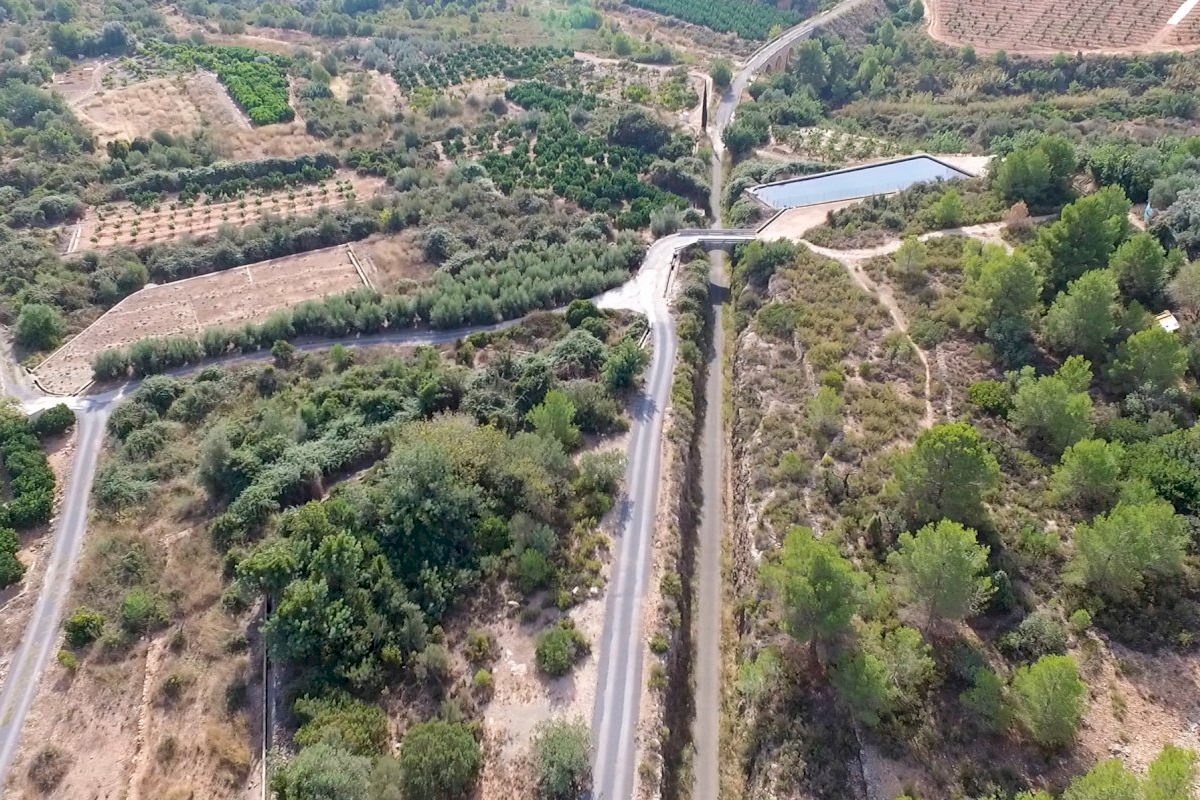
Sagunto's City Council has approved a motion to reconnect the Ojos Negros Green Way (former mining railway) with the coastal spot where its history began over a century ago.
Sagunto City Council has taken a first institutional step towards reconnecting the Ojos Negros Green Way (Vía Verde, a cycling and walking trail on a former railway line) with the place where it originally began. The council's plenary body approved a motion to push forward the steps needed to extend the current route to the point on Sagunto's coast where its story started over a century ago, though the approved text does not yet set out a timeline or specific budget for the extension.
A motion like this does not, by itself, come with an assigned budget or execution date: it is a declaration of political intent committing the governing team to explore the extension's feasibility, though it will later need a specific technical project, its own budget line and, likely, coordination with other authorities if the route crosses land outside municipal ownership.
To understand the scope of the initiative, it helps to look at the origins of the infrastructure itself. The route the Green Way now follows once belonged to the old Ojos Negros-Sagunto railway, a narrow-gauge mining line that operated between 1907 and 1972, carrying iron ore for decades from the Ojos Negros mines in Teruel to the Sagunto coast. There, its promoters built a pier to load the ore directly onto ships bound for other ports.
Spain's green ways, mostly created from disused railway lines, have become a significant resource for nature tourism and cycling tourism in recent decades, with routes that draw both local users and visitors who cover them in stages along the way between inland Teruel and the Valencian coast.
That pier, no longer part of today's Green Way route, is exactly the point referenced by the council's phrase justifying the motion: the place "where its history began". Symbolically or physically reconnecting that link would close the loop between Teruel's mining interior and the Sagunto coastline that was its final destination for decades.
Behind that railway lay a major business venture for its time: the Compañía Minera de Sierra Menera (Sierra Menera Mining Company), founded on 3 September 1900 in Bilbao by Basque businessmen Ramón de la Sota and Eduardo Aznar, which built the line and worked the Teruel mines. Years later, in 1917, the same owners founded the Compañía Siderúrgica del Mediterráneo (Mediterranean Steel Company) specifically to build a steel plant in Sagunto — the seed of what became the major steel industry that shaped Puerto de Sagunto (coastal district) throughout the 20th century.
That historical thread directly connects the mining railway to the birth of Sagunto's steel industry: the ore coming down from Ojos Negros was not only shipped out by sea from the pier, but also fed the plant the same steel company built in the town — the origin of the industrial identity Puerto de Sagunto still carries today in structures like the Blast Furnace.
For the town, extending the Green Way to the coast would also have an immediate practical value: it would link an already well-established cycling route with Puerto de Sagunto's beaches, industrial heritage and dining options, widening the choices for those who currently arrive by bike from inland Castellón and Teruel and have to detour from the original route to reach the coast.
The motion approved by the council fits into a wider effort to highlight this railway and industrial past, at a time when Sagunto promotes its mining and steel heritage as part of its tourism and cultural identity, alongside sites like the Roman Theatre and the Blast Furnace No. 2 itself. Motions like this one are also typically the first step toward seeking co-financing from higher levels of government, such as the Valencia Provincial Council or the regional Generalitat, which in recent years have backed various green-way restoration projects across the Valencian Community through grant schemes specifically for cycling infrastructure and sustainable tourism. Similar efforts to revive old railway routes have already been launched in other Spanish towns with a mining past, typically with mixed funding from European rural development funds, the regional government and municipal contributions — a model Sagunto's council will likely also need to consider if it wants to turn this motion into a workable project. It remains to be seen what concrete steps the governing team will take to turn this political intent into a defined technical and budgeted project. According to elperiodic.com, with additional data from Wikipedia on the Ojos Negros Green Way.