Canet's PSPV visits tax office to respond to Compromís complaint
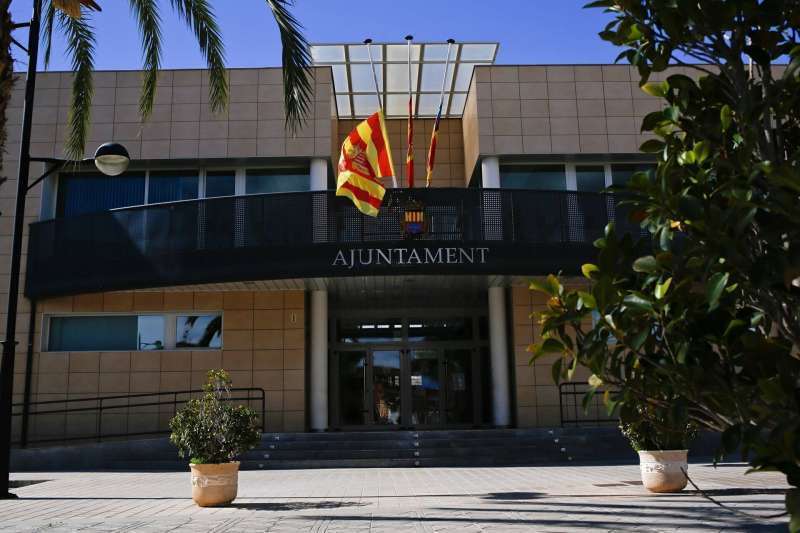
In Canet d'En Berenguer, a town neighbouring Sagunto in the Camp de Morvedre district, the PSPV-PSOE party went voluntarily to the tax agency on Wednesday to hand over documents and respond to a Compromís complaint about alleged irregular cash payments.
Socialist councillor Eduardo Almor Ruiz, who oversees the Canet council departments of Internal Regime, Local Police, Infrastructure, Culture, Maintenance, GESCANET (one of the council's public service areas) and Festivities and Communication, appeared before the Tax Agency (Agencia Tributaria) this Wednesday on his own initiative, bringing all the documentation related to the case with him. The visit follows a complaint that Compromís, a Valencian left-wing party, filed in late August with the tax authority and with the Valencian Anti-Fraud Agency. In that complaint, Compromís accuses the socialist municipal group of paying several invoices in cash above the legal limit, in order to justify the subsidies the group receives every year as one of the parties represented on the council.
Almor said that the day before his visit, the Compromís spokesperson had gone to those same tax offices to, in his view, spread unfounded accusations against the socialists. In response, he said, the PSPV decided to show up in person with every receipt and voluntarily submit itself to a tax review. The councillor defended the group's management of the funds, saying they acted with a clear conscience throughout and that the paperwork handed over to the tax authority backs up that version of events.
The socialist group insists that the payment method now under question has been used since 2019 without ever causing a problem before, and it points out that the method always had the approval of the council's own internal auditing and treasury departments. Even so, the group admits that the procedure was changed in 2025 to avoid future disputes of this kind — a change that coincides closely with the period in which Compromís says it detected the irregularities that eventually led to the complaint.
The PSPV also released a statement on social media linking this complaint to another recent local controversy: the installation of a red-light traffic camera in the town, an issue on which Compromís sided with Vox, a national right-wing party, before the summer. In the statement, the socialists describe the tax complaint as an accusation built on false data, and they say the Tax Agency itself told them that no case is currently open against the group. The message also adds, in an ironic tone and with a clear nod to the approaching municipal elections, that some people in local politics seem to be especially on edge as the vote draws nearer.
The underlying dispute goes back to a report drawn up by the council's own internal auditing department, the office that reviews and signs off on the council's accounts, which Compromís obtained access to in late August. According to that report, the general procedure for granting and justifying subsidies to council groups followed the applicable rules at every step, so there would be no irregularity in how the public money itself was distributed among the groups. The doubt raised by auditors centres solely on how certain 2023 and 2024 invoices were paid, which is why the case was referred on to the Tax Agency, the body with legal authority to inspect the matter and, if warranted, impose a penalty.
The legal limit both sides keep referring to comes from Spain's 2021 anti-fraud law (Ley 11/2021, on measures to prevent and fight tax fraud), which cut the general cap on cash payments between businesses, self-employed workers and entities such as council groups from €2,500 down to €1,000. Exceeding that threshold in a single transaction can count as a serious offence under the law, which is why it ultimately falls to the Tax Agency to decide whether the specific payments Compromís flagged actually broke the rule.
For residents of Canet, the outcome of this review has a fairly direct effect on local accountability: it will determine whether the public money allocated each year to council groups — up to €3,500 a year in the case of the PSPV, under the plenary agreement that regulates this kind of aid — was managed lawfully throughout, or whether there was a punishable breach in how it was paid out. Until the Tax Agency issues a ruling, the two parties continue to maintain conflicting public accounts of what actually happened with the disputed 2023 and 2024 invoices. According to El Periódico de Aquí — Sagunto / Camp de Morvedre, with additional background from Spain's Official State Gazette (BOE) on Ley 11/2021.